– Set to Hold Zonal Public Hearings across 12 centres in the six geopolitical zones
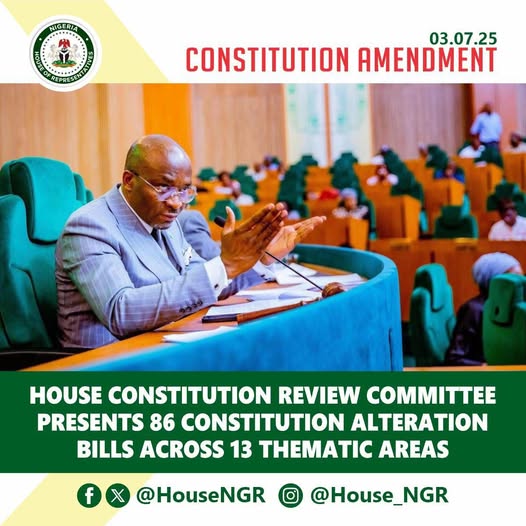
Abuja, FCT | July 3, 2025 – The House of Representatives has formally presented a comprehensive suite of constitutional alteration bills as part of its ongoing review of the 1999 Constitution (as amended). The compendium, structured along thirteen thematic areas, has been prepared by the House Committee on Constitution Review under the leadership of the Deputy Speaker and Committee Chairman, Rt. Hon. Benjamin Okezie Kalu, CFR.
The bills, which are now set for public engagement at the Zonal Public Hearings, reflect the aspirations of Nigerians as captured through memoranda and engagements with stakeholders. They are designed to address fundamental governance challenges and deepen the country’s democratic foundations.
The bills are organised under the following themes:
1. Electoral Reforms – Proposals include single-day general elections, independent candidacy, establishment of the Electoral Offences Commission and Political Parties Regulatory Commission, as well as reforms to INEC’s structure and appointments.
2. Judicial Reforms – Covering expedited appointment of judges, establishment of Local Government Election Tribunals, judicial independence, and jurisdictional reforms to enhance access to justice and reduce delays.
3. Legislature – Bills to grant the Clerk power to proclaim a new Assembly, ensure automatic admission of members with valid certificates of return, and set timelines for treaty ratification.
4. Inclusive Governance – Introduction of reserved seats for women and persons with disabilities at federal, state, and local levels, and mandating ministerial representation for women.
5. Security and Policing – A significant proposal seeks to constitutionally establish state police, ensuring decentralised policing in line with subnational realities.
6. Devolution of Powers – Enabling states to legislate on areas like taxation, tourism, road tolls, mines and minerals, quarantine, water management, and criminal identification systems.
7. Strengthening of Institutions – Includes separation of Attorney-General from Minister/Commissioner of Justice, creation of an FCT House of Assembly, mandatory 10-year census cycle, and expanded powers for the Auditor-General.
8. Traditional Institutions – A bill to formally recognise the roles of traditional rulers within the country’s security and governance frameworks.
9. Fiscal Reforms – Mandating publication of Auditor-General reports, creation of special accounts for borrowed funds, and improved budget transparency.
10. Citizenship and Indigeneship – Proposals to introduce citizenship by investment, gender-equal spousal citizenship rights, and revised indigene status criteria based on residence or marriage.
11. Fundamental Human Rights – Bills to define torture, outlaw public parading of suspects, commute death penalties for pregnant women, and automatically domesticate international human rights treaties.
12. Local Government Reform – Enhancing autonomy through provisions for independent electoral bodies, financial autonomy, and correction of local government names in constitutional schedules.
13. States and Local Governments Creation – Proposals received via memoranda on new states and LGAs are undergoing technical review and consultation for possible inclusion.
In line with the commitment of the House of Representatives to foster public engagement and solicit inputs from Nigerians on these far-reaching legislative reforms, the Committee has unveiled a Summarized Compendium of 86 Constitution Review Bills. The compendium contains explanatory memoranda, long titles, and detailed expositions of each bill. It is intended to serve as a reference material for stakeholders during the public hearings and a guide for citizens to understand and critique the legislative proposals.
To ensure inclusivity and meaningful participation, Zonal Public Hearings will hold across 12 centres in the six geopolitical zones of Nigeria. The Northern zones will host hearings from Friday, July 11 to Sunday, July 13, 2025, while the Southern zones will conduct their hearings from Friday, July 18 to Sunday, July 20, 2025. A National Public Hearing is scheduled to hold on Monday, July 21, 2025, in Abuja.
These hearings are designed to provide an open platform for citizens, civil society organizations, professional bodies, traditional institutions, and other interest groups to express their views and contribute meaningfully to the constitutional reform process. The Committee will use the feedback gathered to guide legislative decisions when the bills are brought up for voting.
As Deputy Speaker Rt. Hon. Benjamin Kalu, CFR, emphasised: “I call on all stakeholders and the general public to actively participate in the zonal and national public hearings. Your contributions and inputs are crucial to the success of this constitutional review process.”
The House encourages the public to download the summarised compendium on bit.ly/HCCRCompendium, review the proposed bills, and provide feedback via the official website: www.hccr.gov.ng, and at the hearings.
Together, we can create a more inclusive and effective constitution that reflects the aspirations of our great nation.
Signed:
Rep. Akin Rotimi Jr.
House Spokesman